
Financial decisions made under uncertainty rarely turn out well, which is exactly why Ashutosh Financial Services keeps returning to a simple idea: people make better choices about their money when someone takes the time to explain how the pieces actually fit together. That belief has shaped the firm’s ongoing programme of financial literacy sessions held across India and among Indian communities overseas, and it was very much the spirit behind Sudan Financial Connect 2026, held on 8th August 2026 in Rajkot for families who have returned to India after years of living and working in Sudan.
The session was led by Daxesh Kothari and CA CFP Rajit Kothari, and it addressed a group of attendees whose situation is more layered than it might first appear. Many families who came back from Sudan have now spent several years in India, which means their tax residency status has shifted, their overseas savings need a compliant route home, and their estate and investment plans need to be rebuilt around Indian rules rather than the ones they were used to abroad. The session was structured around the questions this audience is actually asking, which made it a practical working session rather than a general talk.
Before getting into personal finance, the speakers set the stage with a look at how global events have been shaping the Indian economy. The Iran war, which began in late February 2026, pushed Brent crude up sharply before it partially retreated, and it briefly weakened the rupee against the dollar. Yet India’s response offers a useful lesson in resilience: the country has diversified its crude sourcing over the years, reducing its reliance on the Strait of Hormuz and turning to discounted Russian oil and non-OPEC suppliers, which meant Indian petrol prices rose only marginally compared with sharper increases seen in the UK, UAE and Pakistan. Inflation still ticked up and growth forecasts were trimmed slightly, but the broader point stood: a $4 trillion economy with a diversified energy strategy can absorb shocks that a smaller, less prepared one could not.
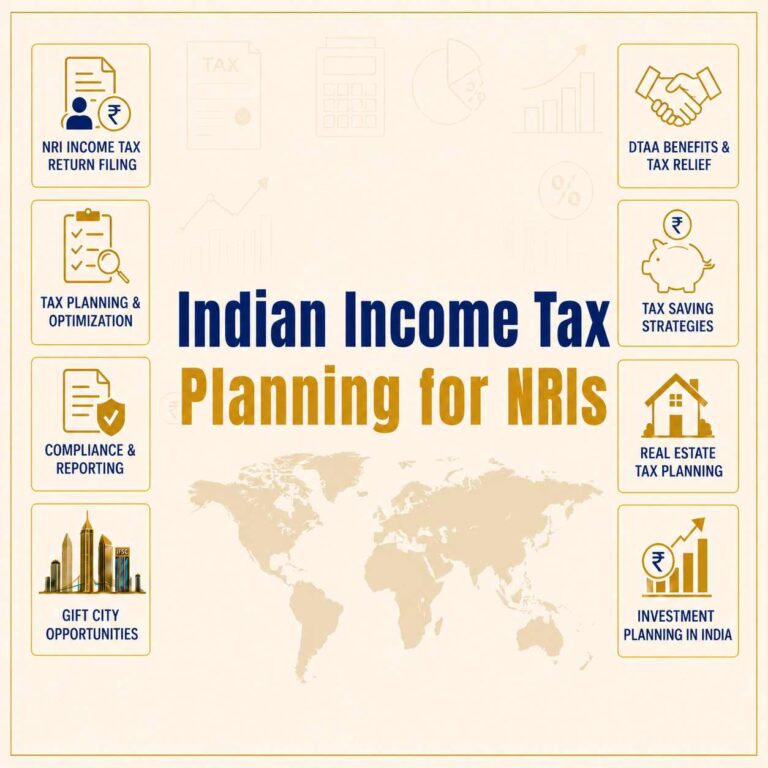
From there, the session turned to the question most attendees had come for: how does one manage Indian income tax after returning from Sudan for good? The explanation centred on residential status, which under Indian tax law is not a one-time determination but something recalculated every year based on physical presence, with no exemption for people who were stranded abroad due to war or other emergencies. Once someone crosses into “Resident and Ordinarily Resident” status, their global income becomes taxable in India, foreign bank accounts and assets must be reported, and even FCNR deposit interest becomes chargeable to tax. On the more reassuring side, income up to twelve lakh rupees a year currently attracts no tax at all, which opens the door to some sensible planning.
That planning discussion covered ground that will be familiar to families rebuilding their finances after a move: using a Hindu Undivided Family structure to access a separate basic exemption and lower slab rates, and spreading investments across family members to make full use of each person’s exemption limit and the annual capital gains allowance on equity. The speakers also walked through what happens to Indian assets when someone passes away without a will, where legal heirs are decided by the Hindu Succession Act rather than personal wishes, and contrasted this with the flexibility a properly drafted will offers, including the ability to leave assets to people who are not automatic legal heirs and to build tax planning into succession itself.
On the investment side, the session covered the practical choices available today, including professionally managed equity mutual funds, portfolio management services for larger portfolios, structured routes for global diversification into US, Chinese and broader international markets, and fixed income options ranging from bank deposits to corporate debentures. A case study built around a hypothetical returning family illustrated how thoughtful allocation across these instruments, combined with awareness of exemption thresholds, can generate a meaningful annual cash flow while keeping the tax outgo close to nil. Real estate was addressed too, with a candid look at its liquidity constraints and limited scope for appreciation compared with financial assets, a perspective attendees seemed to find useful precisely because it went against the instinct many have to buy property first.
Sessions like this one reflect why Ashutosh Financial Services keeps investing in financial education across the communities it serves. Rules around residency, taxation and cross-border money rarely stay simple, and families rebuilding their lives after years abroad deserve a clear, honest explanation of where they stand. The firm’s calendar of similar initiatives, in India and with Indian communities overseas, continues in that same spirit: helping people understand their money well enough to make their own good decisions about it.