
Ashutosh Financial Services believes that sound financial decisions rarely happen by accident. They are the product of understanding — of knowing how currencies move, how tax rules apply across borders, and how global events eventually show up in a family’s investment statements. That belief is why the firm continues to organise sessions for Indians living abroad, bringing complex financial and regulatory subjects down to something that is genuinely usable in everyday decision-making.
On 23rd May 2026, this took the form of a session in Uganda titled “India in the Changing Global Economic & Geopolitical Dynamics,” aimed at the local Non-Resident Indian community. The speakers, Daxesh Kothari and CA Rajit Kothari, chose a subject that sits at the intersection of two things Ugandan NRIs care about deeply: what is happening to the Indian economy, and what that means for their own money sitting in Indian bank accounts, mutual funds, and other assets. Given how closely NRI wealth is tied to developments back home, an audience like this benefits from a grounded, current view rather than headlines alone.
The session opened by unpacking two developments that had rattled sentiment around the Indian economy in the months before the event — the conflict involving Iran and the rapid rise of artificial intelligence. The Iran war had pushed crude oil prices up sharply, and because India imports the vast majority of its crude, that translated into a weaker rupee, higher input costs for industry, and inflationary pressure across the economy. The session placed this in perspective by comparing India’s oil consumption and GDP size in 2008 against 2025: oil imports had risen about 80 percent, but the economy itself had grown roughly fourfold, showing that dependence on imported oil, while real, has not grown as fast as the economy’s capacity to absorb the shock. A similar reframing was applied to fears around AI displacing India’s IT services sector. Certain sector indices had fallen and foreign investors had pulled money out of AI-exposed Indian equities, but the presentation pointed to India’s Global Capability Centres — offices of multinational companies operating out of India — as a growing, resilient source of employment, alongside the argument that AI adoption is more likely to make Indian businesses more efficient over time than to render them obsolete.
Set against these headwinds, the session highlighted India’s underlying resilience: it is expected to be the fastest-growing economy among the world’s top twenty in 2026, and its stock market ranks fourth globally by market capitalisation. A currency comparison specific to the audience was also shared — the rupee’s depreciation against the Ugandan shilling over the past decade has been far milder than its depreciation against the US dollar, a distinction attributed to interest rate and inflation differentials rather than any underlying weakness in the Indian economy.
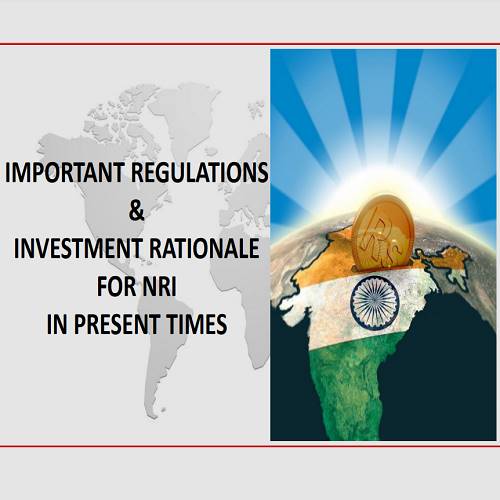
A substantial part of the session was devoted to the regulatory framework NRIs need to navigate. The distinctions between NRO, NRE, FCNR, and GIFT City bank accounts were explained — covering which are repatriable, which carry tax-free interest, and how funds can move between them. The audience also learned about the rules for transferring money out of India, including the US $1 million per year limit for remittances from NRO accounts, and the situations, such as inheritance or the sale of property, where this route commonly applies. Succession planning received particular attention: assets are distributed under the terms of a valid Will where one exists, and under Hindu succession law or the NRI’s country of domicile where it doesn’t. A nominee, the session clarified, is only a custodian of assets on paper and not their legal owner, which is why a properly executed Will still matters even when nominations are in place.
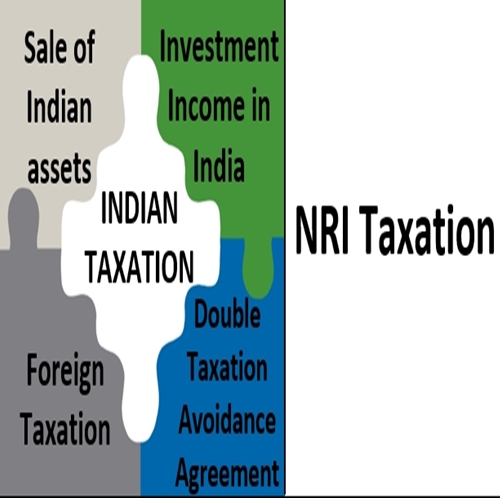
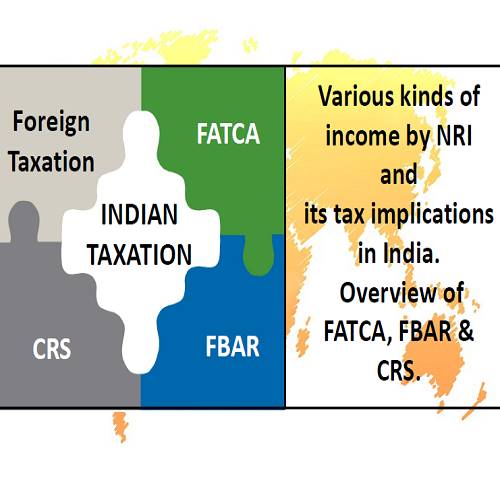
On taxation, the session explained how the India-Uganda Double Taxation Avoidance Agreement can reduce or eliminate Indian tax on capital gains, dividends, and interest for Ugandan tax residents, provided a Tax Residency Certificate is obtained and the appropriate forms are filed, and how any tax paid in India can typically be offset against liability in Uganda rather than being paid twice.
The remainder of the session turned to how NRIs might actually put money to work — through Indian mutual funds and portfolio management services, through the GIFT City route, which allows dollar-denominated investment into Indian markets without an Indian bank account or tax filing, and through global portfolios spanning US equities, Chinese equities, and commodities like gold and copper. Retirement planning was addressed through a practical lens too, walking through how a monthly investment figure can be worked out today to support a fixed, inflation-adjusted withdrawal decades later.
Sessions like this reflect a simple conviction: that NRIs make better financial choices when they understand not just the rules, but the reasoning behind them. Ashutosh Financial Services remains committed to continuing these conversations across the communities it serves, helping people make sense of a financial landscape that rarely stays still for long.