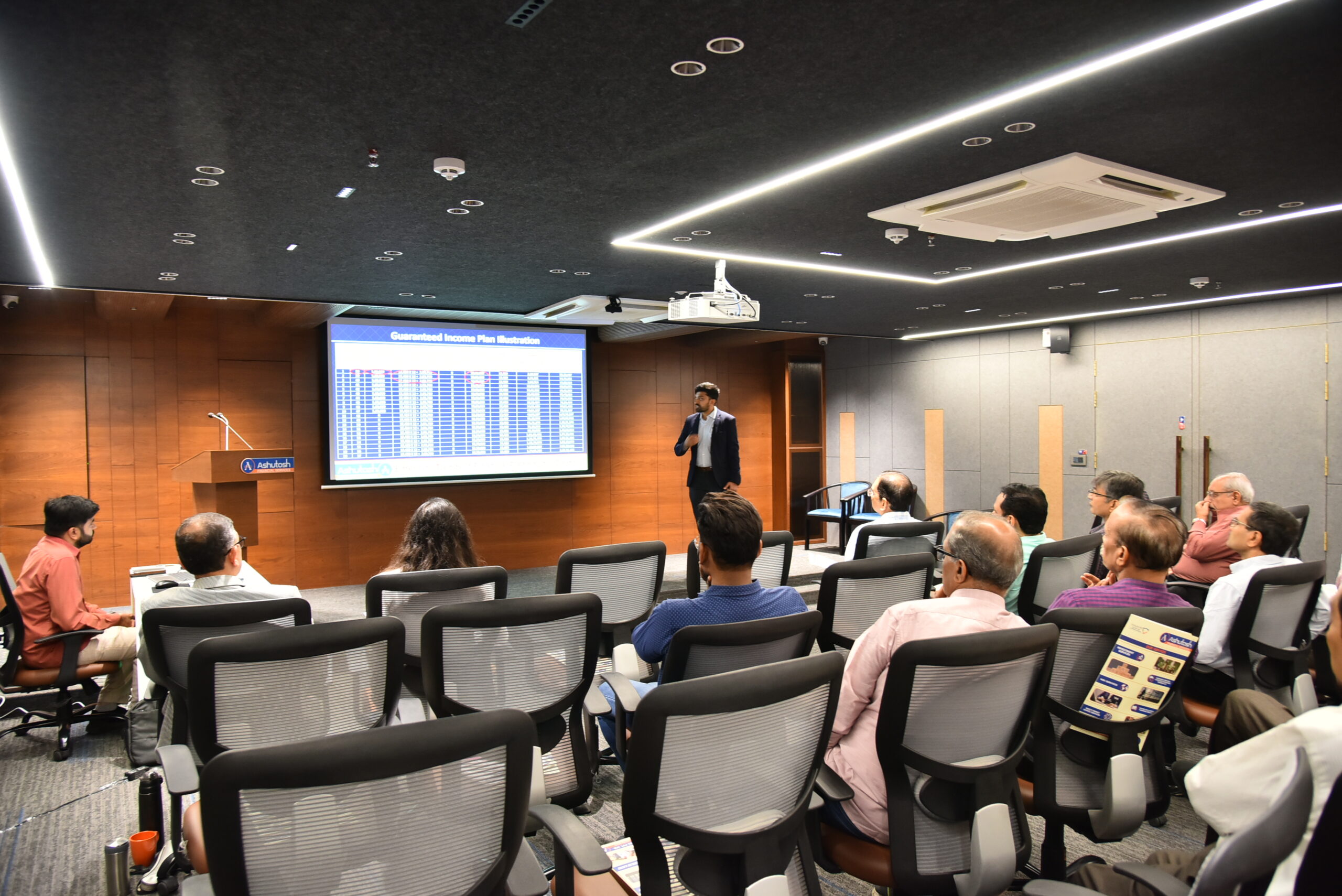
Doctors spend years mastering the science of healing, yet the financial side of their practice and personal wealth often gets far less attention than it deserves. It was with this gap in mind that Ashutosh Financial Services organised a session for the medical community in Rajkot, built on the belief that sound financial decisions are only possible when they rest on real understanding. The company has long treated financial education as part of its everyday work, not a one-off exercise, and this event was another step in that ongoing effort.
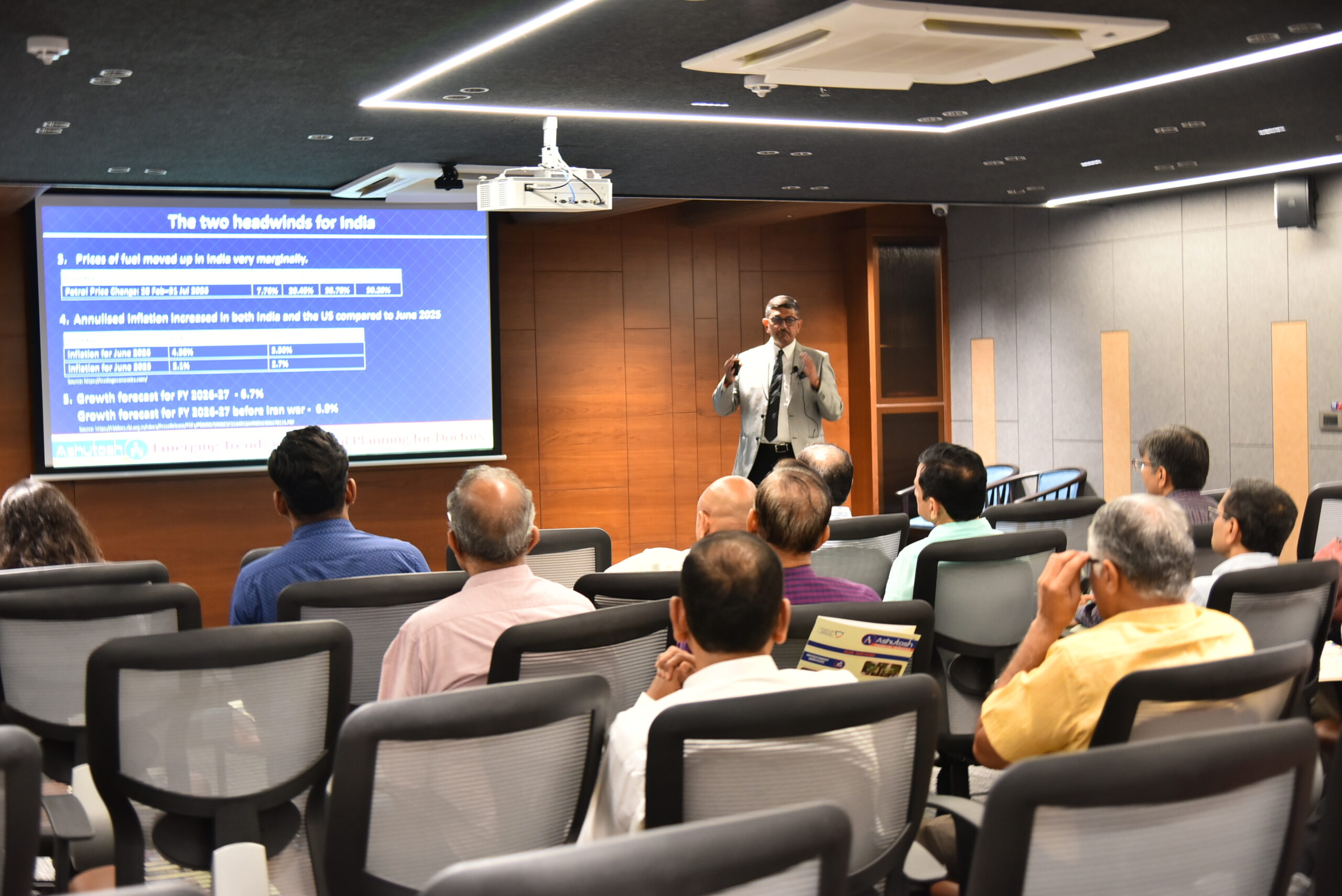
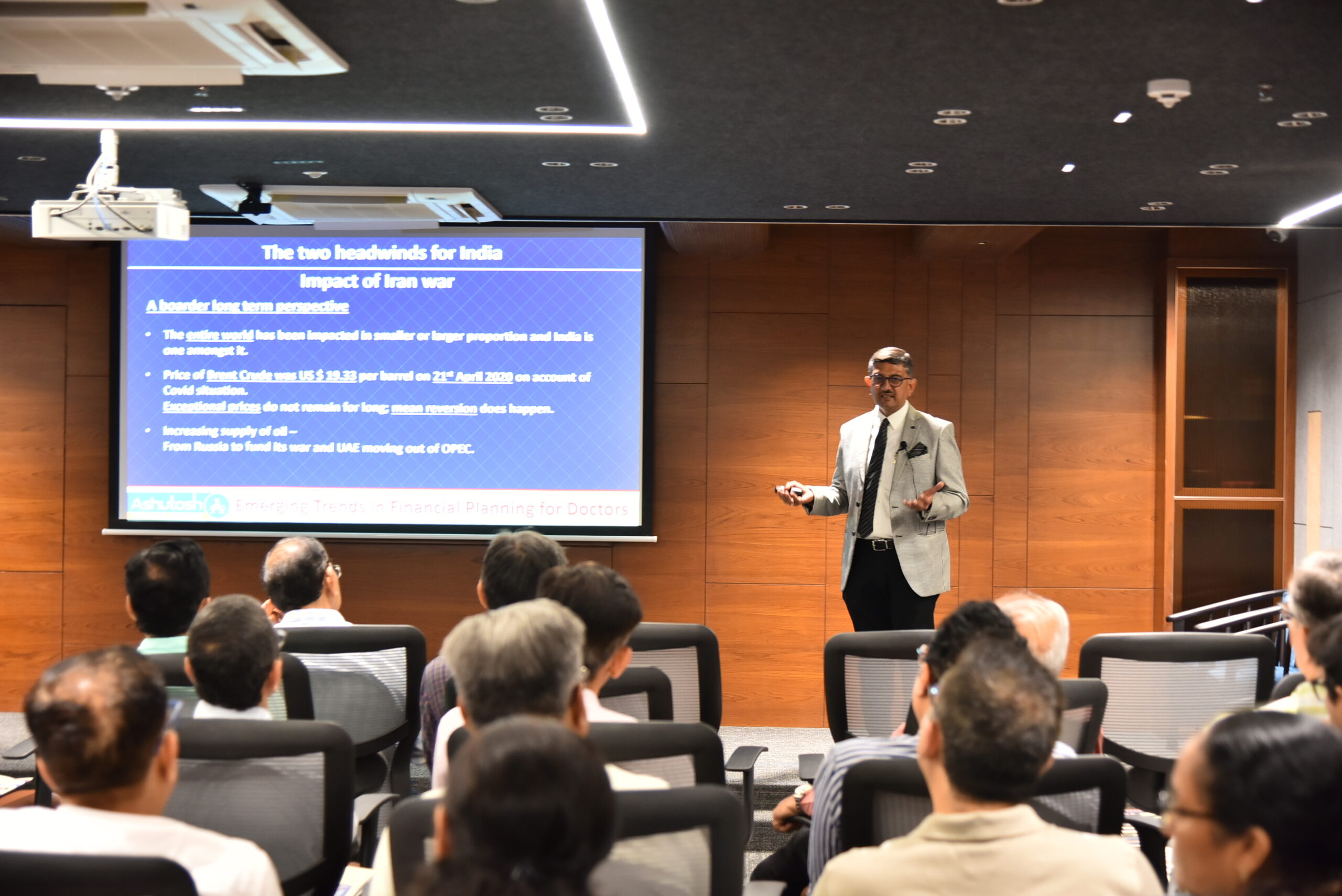
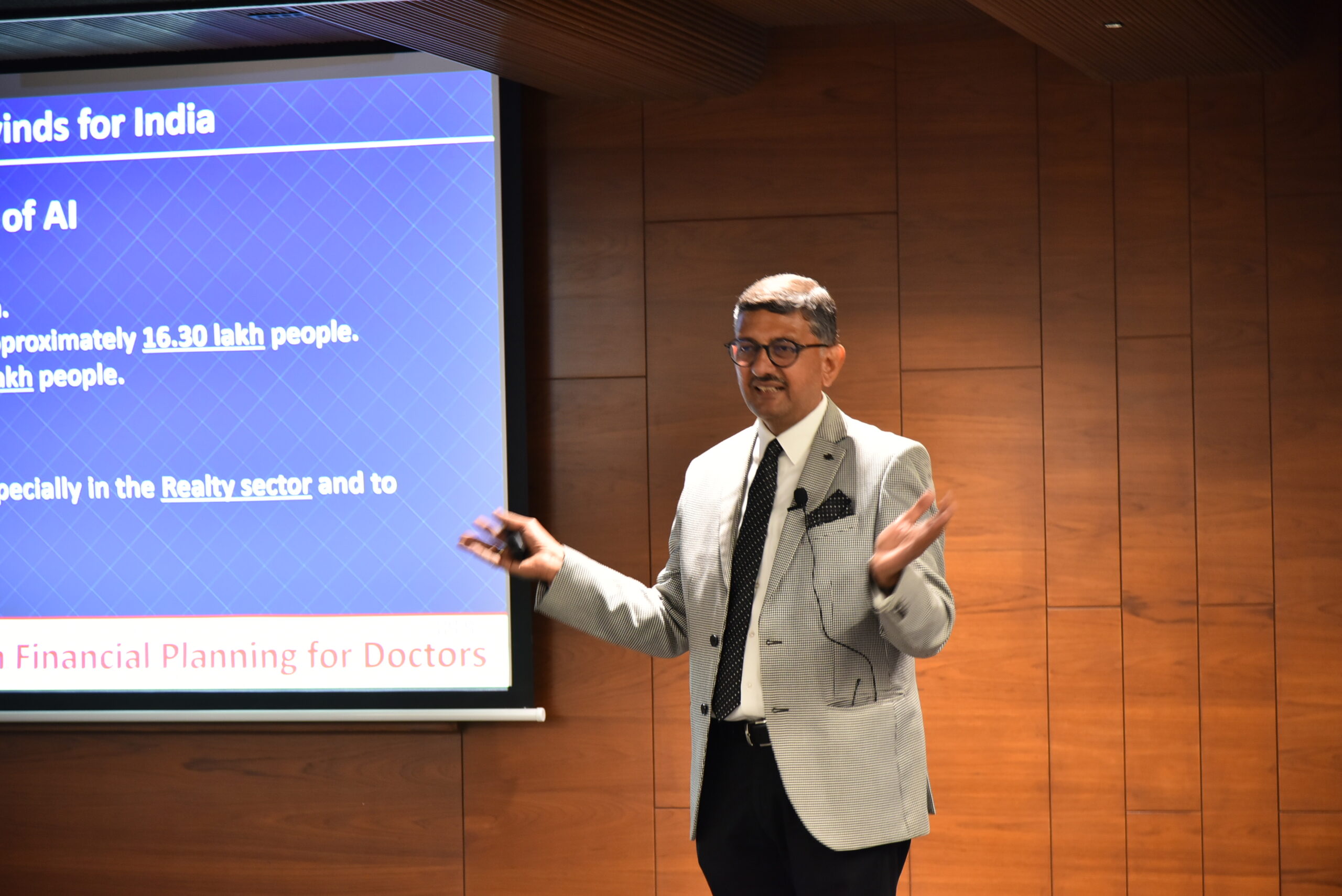
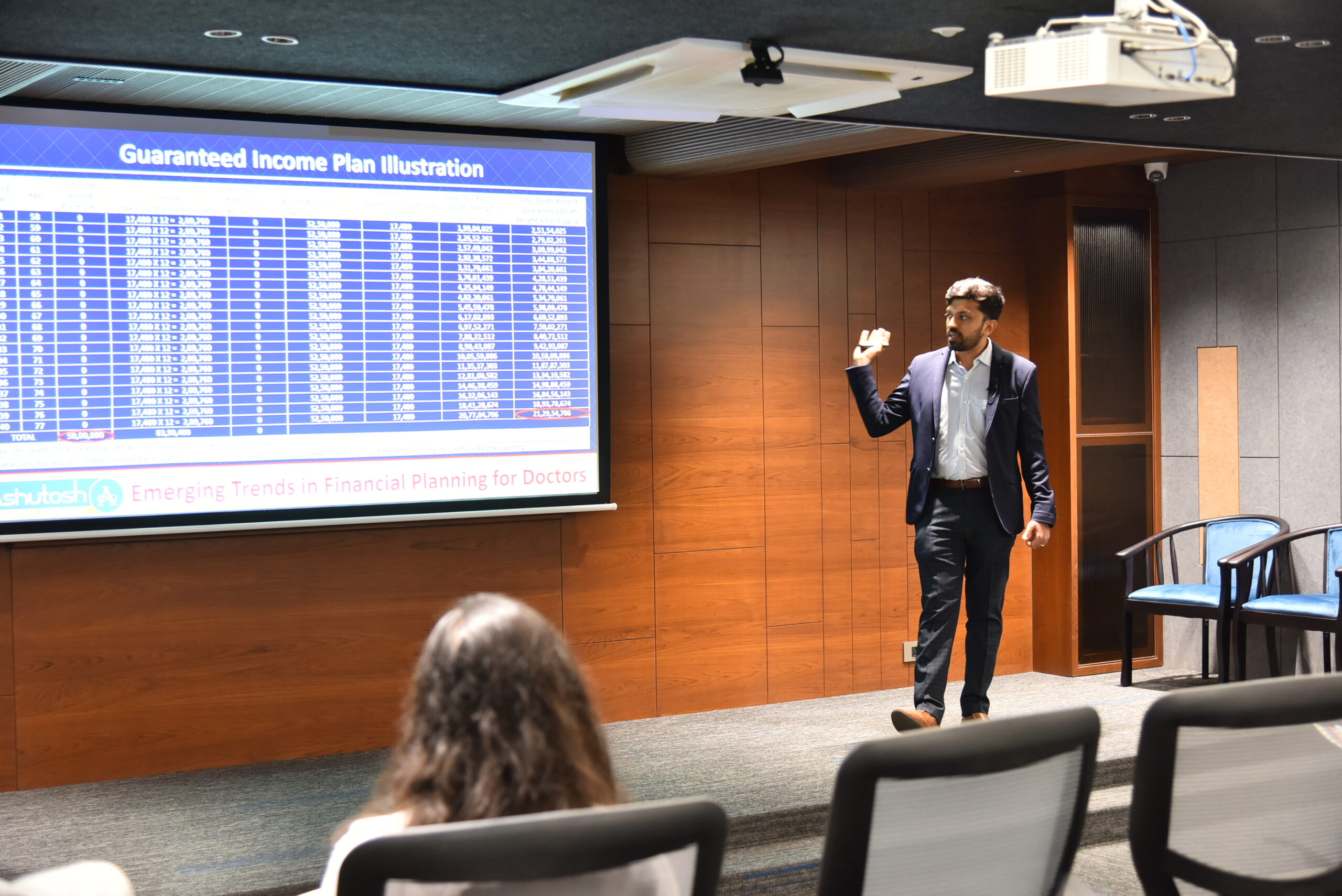
The session, titled “Emerging Trends in Financial Planning for Doctors,” was held on 7th August 2026 in Rajkot for an audience of practising doctors. It was led by Daxesh Kothari and CA CFP Rajit Kothari, who brought a mix of macroeconomic perspective and hands-on planning detail to the discussion. For doctors, who typically run their own practices, earn variable professional income, and rarely have the bandwidth to track markets or tax rules closely, this kind of structured, practical input tends to be especially useful.
The session opened by placing personal finance within a wider economic context. Two developments were flagged as having shaped India’s economic environment through 2026: the conflict involving Iran, which pushed crude oil prices sharply higher before they partly corrected, and the rapid rise of artificial intelligence, which has been reshaping investor sentiment and India’s IT sector. The crude oil story was explained clearly: since India imports roughly nine-tenths of its oil needs, a spike in global prices increases the country’s import bill, puts pressure on the rupee, and can feed into inflation and slower growth. Even so, the presentation pointed out that India managed this shock relatively well, keeping domestic fuel price increases modest compared with several other countries, partly by diversifying its sources of crude. On the AI front, the discussion touched on how global investors have been reallocating capital toward AI-driven markets, which has weighed on foreign investment into Indian equities and raised questions about the long-term relevance of India’s IT services industry, even as the sector remains one of the country’s largest employers.
From there, the session moved into more immediately actionable territory, starting with taxation and accounting. Doctors were encouraged to treat their books of accounts as more than a compliance formality; well-maintained records support smoother succession planning within a practice, work as a genuine management tool, and matter significantly if a practice is ever valued for a merger or sale. The presentation also walked through legitimate ways doctors can plan their tax outgo, such as claiming professional expenses that are wholly related to their work, and using tools like a Hindu Undivided Family structure to distribute income more efficiently within a family, while flagging the stricter penalties now attached to unexplained cash credits and large cash expenses.
Estate planning received considerable attention, and rightly so, since many people postpone thinking about it. The session explained the difference between dying with a valid will, where assets pass according to the testator’s wishes, and dying without one, where succession follows the Hindu Succession Act and can produce outcomes quite different from what someone might have intended. A clear point was made about nominees: being named a nominee on a bank account or investment does not make someone the legal owner of that asset, since ownership ultimately follows the will or the applicable succession law. This distinction alone can prevent a great deal of confusion and dispute among family members later.
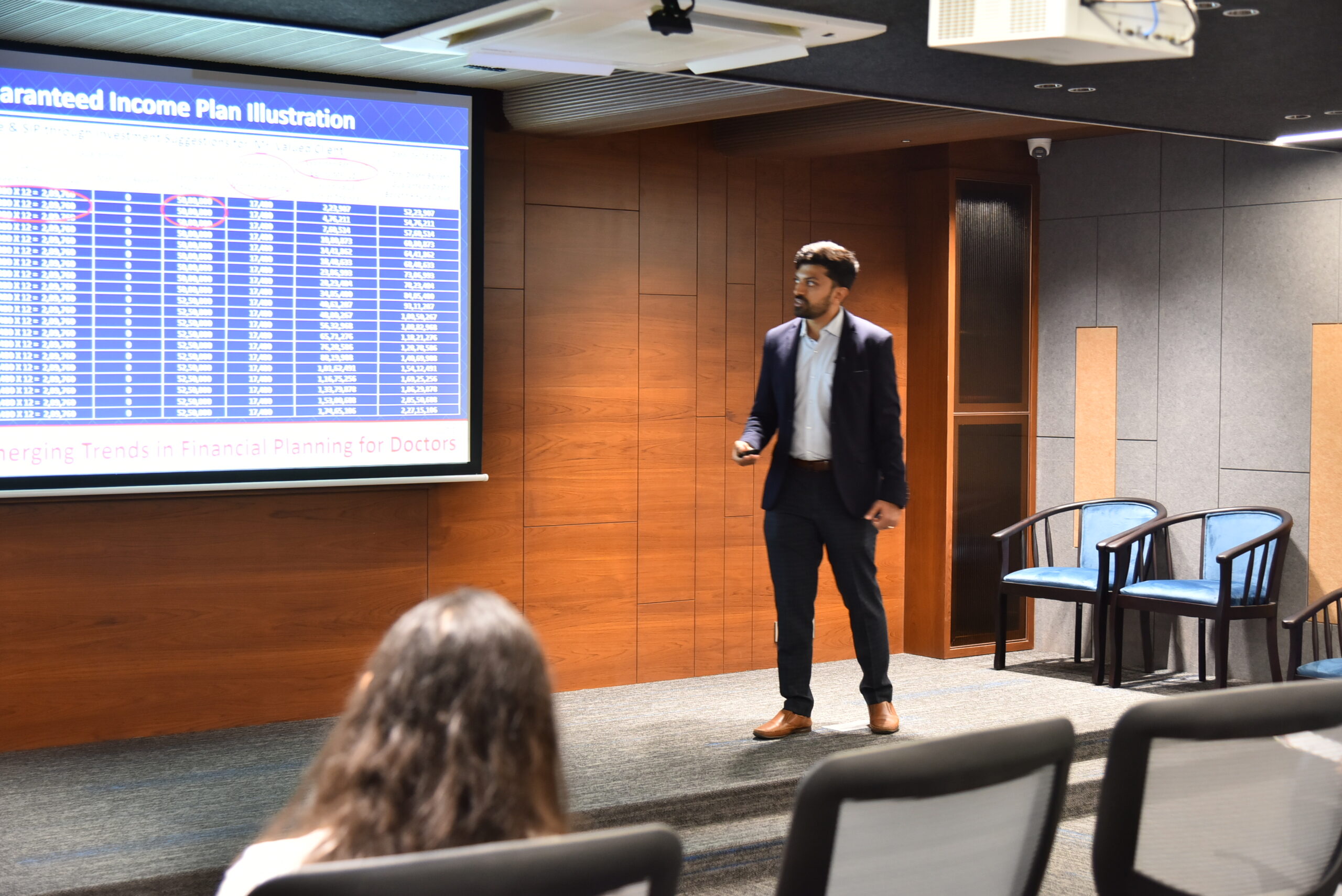
On the investment side, the presentation offered a broad map of options relevant to doctors building long-term wealth, including professionally managed portfolio services for larger investments, fixed income instruments such as corporate deposits and rated bonds, and structured retirement planning through mutual funds, illustrated with a worked example showing how a monthly investment target can be calculated from a desired retirement income. It also introduced global investing as a way to diversify beyond Indian markets, covering exposure to the US, China, and other economies through exchange-traded funds, alongside a note on the routes available for Indian residents to invest abroad within regulatory limits. Real estate was discussed candidly too, with the session highlighting its practical drawbacks, such as poor liquidity and maintenance demands, as reasons many families are shifting a larger share of new savings toward financial assets instead.
Sessions like this one serve a purpose well beyond the room they are held in. Financial literacy is not built in a single afternoon, but conversations that connect real economic developments to everyday decisions around tax, estate, and investment planning give professionals a sturdier footing to make their own choices. Ashutosh Financial Services continues to organise such initiatives across the medical community, guided by the view that better-informed individuals make better financial decisions for themselves and their families.