An NRI Financial Conclave in Rajkot and Ahmedabad: Making Sense of Cross-Border Money Matters
Every year, thousands of Non-Resident Indians navigate a maze of banking rules, tax filings, and investment choices that don’t quite match what they left behind or what they’ve grown used to abroad. Ashutosh Financial Services has long held the view that good financial decisions start with good financial understanding, and its NRI Financial Conclave has become a regular fixture for exactly that reason. The eighth season of this initiative brought together NRIs and their families for detailed, practical conversations on managing money across two countries.
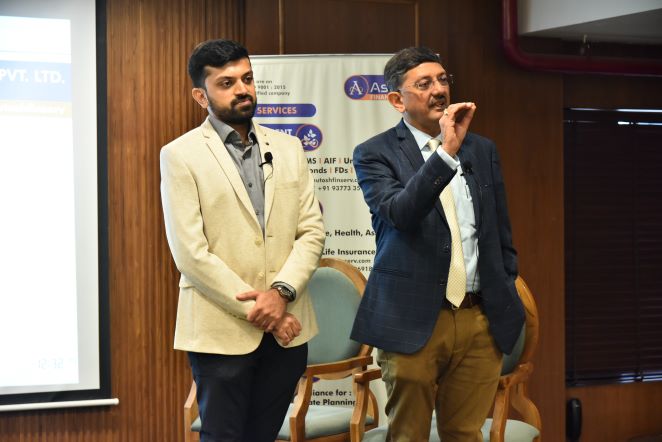
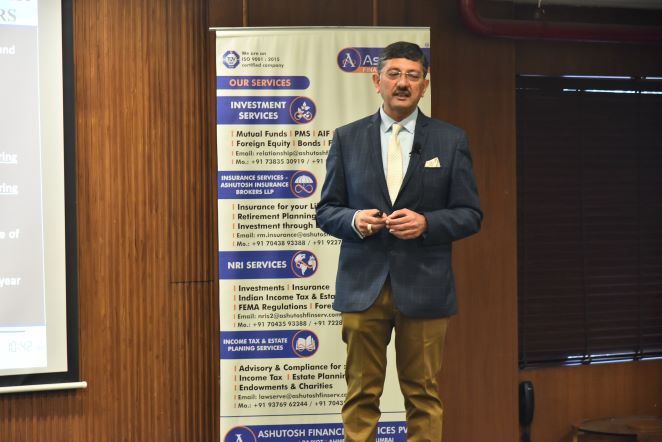
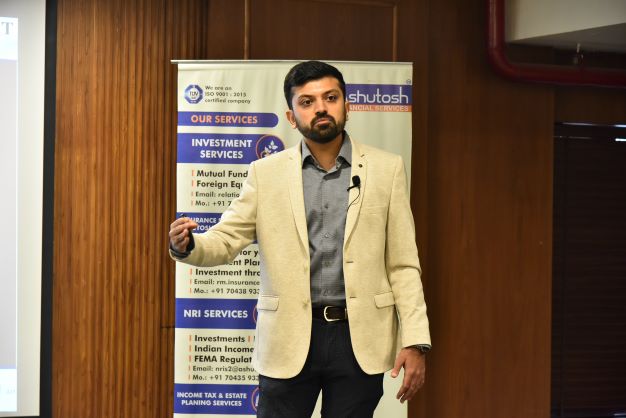
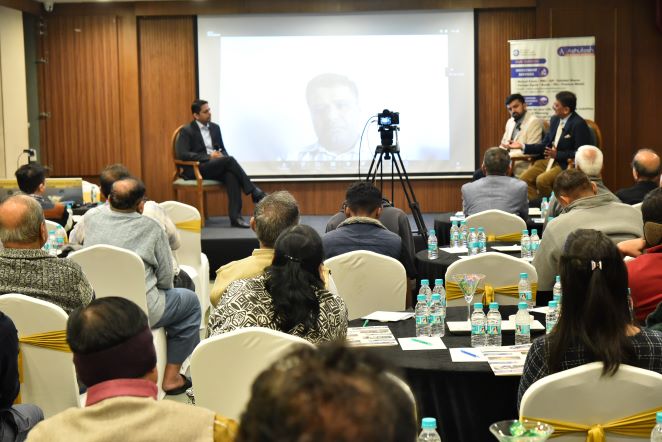
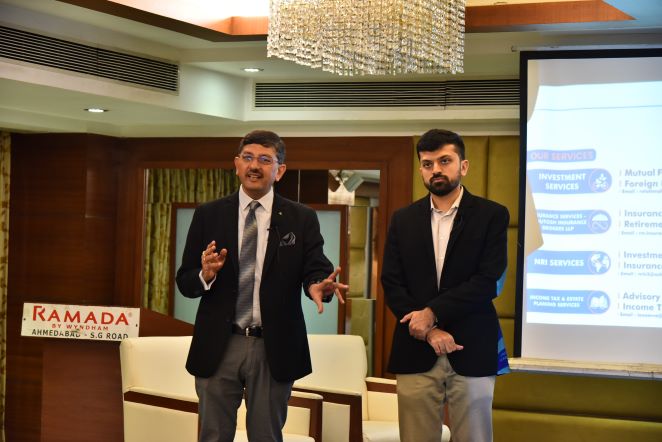
The 2024 edition, held on 12th December across Rajkot and Ahmedabad, was addressed by Daxesh Kothari and CA CFP Rajit Kothari, both speaking to an audience of NRIs looking for clarity on questions that rarely have simple answers: which bank account should I hold, how do I avoid paying tax twice on the same income, and where does India’s growth story leave room for someone investing from abroad. Given how often NRI finances get tangled between two regulatory systems, a session built specifically around this audience’s day-to-day concerns carries real value.
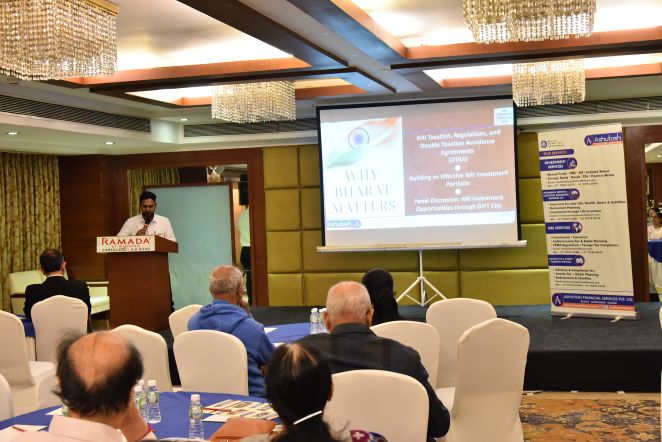
The conclave opened with the mechanics of NRI banking and taxation, a subject that trips up even financially sophisticated people simply because the rules change the moment someone’s residential status changes. The session explained the four main account types available to NRIs — NRO accounts for managing income earned in India, NRE accounts for repatriable foreign earnings, FCNR deposits held in foreign currency, and RFC accounts for those who’ve returned to India. Each carries different tax treatment: interest on NRE and FCNR accounts is exempt from Indian income tax, while NRO account income is taxable. The discussion also covered when a PAN card becomes mandatory for an NRI, from opening a bank account to buying property, and clarified a point that confuses many: NRIs and OCIs are not eligible for an Aadhar card and are therefore exempt from linking one to their PAN.
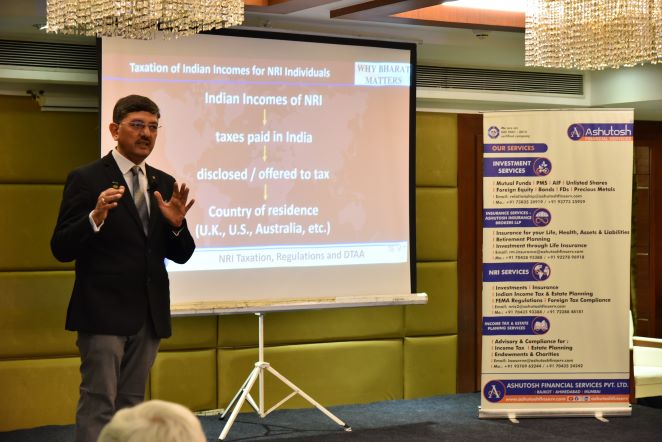
Taxation formed a substantial part of the session, particularly the interplay between Indian tax law and the Double Taxation Avoidance Agreement, or DTAA, that India has signed with most major countries. In simple terms, income that arises in India is taxable here, but an NRI can choose whichever framework — Indian law or the DTAA with their country of residence — works out more favourably. The trickier part is reconciling different financial years, since India’s runs from April to March while the US, for instance, follows a January to December cycle. The session walked through how NRIs can segregate their Indian income by calendar year for US tax reporting and claim credit for taxes already paid in India, so the same income isn’t taxed twice. It also touched on how India’s tax administration has shifted almost entirely to e-filing and faceless assessments, removing the need for any in-person interaction with tax authorities — a change with real practical benefit for someone filing from overseas.
Succession planning received careful attention too, an area NRIs often underestimate. The session clarified that Indian assets are governed by Indian succession law regardless of where the NRI resides, and that a nominee is not the same as a legal owner — nomination simply names a custodian, while actual ownership passes according to a will or, in its absence, the applicable succession law. Importantly, a valid will for Indian assets can be prepared and signed outside India, provided it meets the essential legal requirements, including witness signatures before a notary.
On the investment side, the conclave made the case for why India’s current economic position deserves attention: among the fastest-growing major economies, with strong performance across its stock market segments and a series of structural tailwinds including a young workforce, expanding digital infrastructure, and a growing manufacturing base. For NRIs looking to participate, the session outlined several routes — mutual funds as the most accessible entry point, Portfolio Management Services for those with larger allocations seeking more tailored strategies, Alternative Investment Funds for exposure to unlisted opportunities, and guaranteed return or pension plans for those prioritising predictability. A notable point raised was that NRIs from several African, Middle Eastern, and South-East Asian countries can, under DTAA provisions and correct documentation, see no Indian tax on mutual fund gains at all.
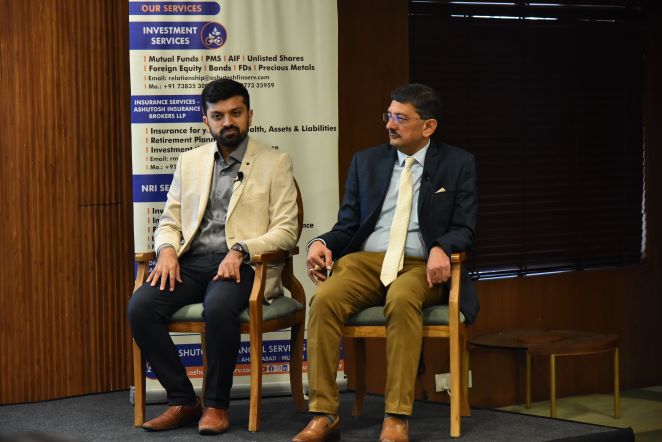
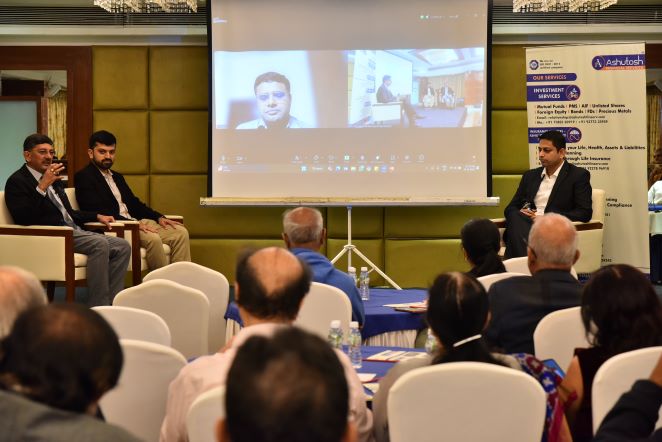
A closing panel discussion turned to GIFT City, India’s first International Financial Services Centre, and its growing relevance for NRI investors. Structured as a jurisdiction where units operate largely outside standard FEMA restrictions while remaining subject to Indian tax law with specific exemptions, GIFT City offers NRIs a way to invest in Indian markets in US dollars, without needing an Indian broking or demat account, and in many cases without Indian tax compliance obligations at all.
Sessions like this reflect something Ashutosh Financial Services returns to consistently: that NRIs manage some of the most complex financial lives there are, straddling two tax systems, two sets of banking rules, and often two different long-term goals. Continuing to unpack that complexity, one conclave at a time, remains part of how the firm thinks about its role in the wider conversation on financial literacy.