Property left behind by a parent or grandparent in India often comes with more paperwork than most NRIs expect. Ashutosh Financial Services organises sessions like this one precisely because that gap between owning an asset and actually being able to use it, sell it, or move it abroad tends to catch people off guard, and closing that gap starts with clear, practical information rather than assumptions carried over from another country’s legal system.
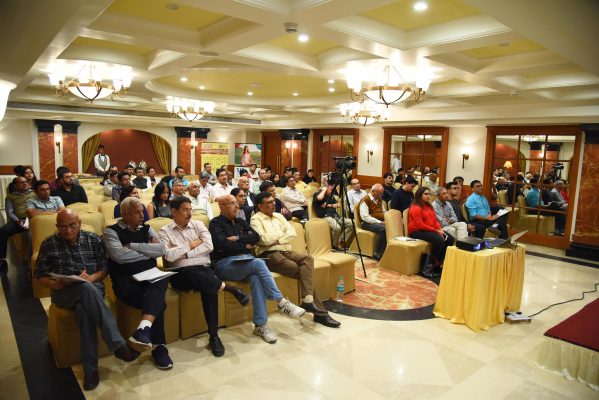
On 25th December 2018, Ashutosh Financial Services held a session titled “Inheritance of Indian Assets, By NRI & To NRI, and Its Tax Implications in India,” with presentations delivered in both Rajkot and Ahmedabad. The speaker, Daxesh Kothari, addressed an audience of Non-Resident Indians, a group for whom questions of Indian inheritance carry particular weight. Many NRIs hold property, bank accounts, or investments in India that were built up over generations, and when a family member passes away, the process of transferring these assets is governed by Indian law regardless of where the heirs happen to live. Understanding that distinction, and the procedures that follow from it, was the core purpose of the session.
The presentation opened by drawing a line between two categories of assets an NRI might hold: those located in India and those held abroad. Assets outside India pass according to the laws of whichever country they sit in, while assets in India are governed entirely by Indian succession law. From there, the session explained the two paths a person’s estate can take after death. If someone leaves a valid will, their assets are distributed through testamentary succession. Without a will, the process falls under intestate succession, and which set of rules applies then depends on the deceased’s religion, with the Hindu Succession Act, Muslim Shariat law, and the Indian Succession Act each covering different communities.
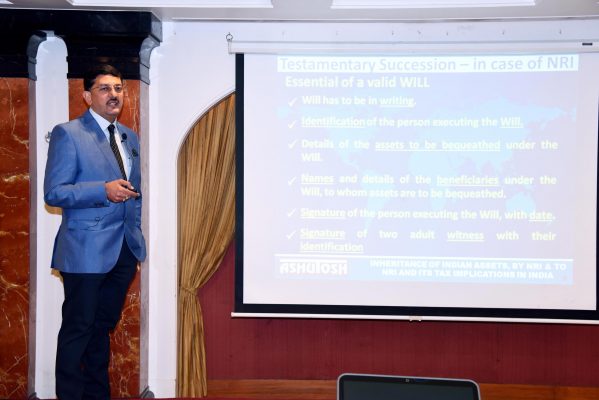
For a will to hold up in India, it needs to meet a specific set of conditions: it must be in writing, clearly identify the person making it, describe the assets and beneficiaries in detail, and carry the signatures of the testator and two adult witnesses. When a will is signed outside India, additional care is worthwhile, such as having it notarised in the country where it is executed and arranging a signed declaration from the witnesses that can later support a probate application in an Indian court. Probate itself, the court order confirming a will’s validity, becomes the conclusive document that banks and other institutions rely on before releasing assets to beneficiaries. A related point covered in the session, and one that surprises many families, is that a nominee or joint account holder is not automatically the owner of an asset after the original holder’s death. Nominees are custodians who hold the asset in trust; the real beneficial owner remains whoever is named in the will, or the legal heirs under intestate succession if no will exists.
Where no will was made, the session walked through how Hindu intestate succession works, distinguishing the heirs of a Hindu male from those of a Hindu female, and outlined how legal heirs establish their claim through a Heirship or Succession Certificate obtained from the Mamlatdar’s office and confirmed by the court. The presentation also covered the practicalities of managing inherited property through a Power of Attorney, including the notarisation and stamping requirements for movable assets and the registration process for immovable property, along with the relevant FEMA and RBI restrictions on who can hold Indian real estate.
On the tax side, the session offered some reassurance: India does not levy an inheritance tax, and estate duty was abolished some years ago. However, income generated by inherited assets is taxed under the normal rules, so rental income, interest from NRO accounts, and gains from selling inherited property or shares are all subject to tax, even though the inheritance itself was not. The presentation broke down the applicable rates for both short-term and long-term capital gains, and explained the conditions under which sale proceeds can be repatriated abroad, generally within the well-known USD 1 million per financial year limit for assets not originally purchased through NRE or FCNR funds.
Sessions of this kind reflect a simple belief that Ashutosh Financial Services holds: that families make better decisions about inherited wealth when they understand the rules governing it well before those rules become urgent. Continuing to bring this kind of structured, practical knowledge to NRI communities remains part of the firm’s ongoing effort to support informed financial planning across borders.