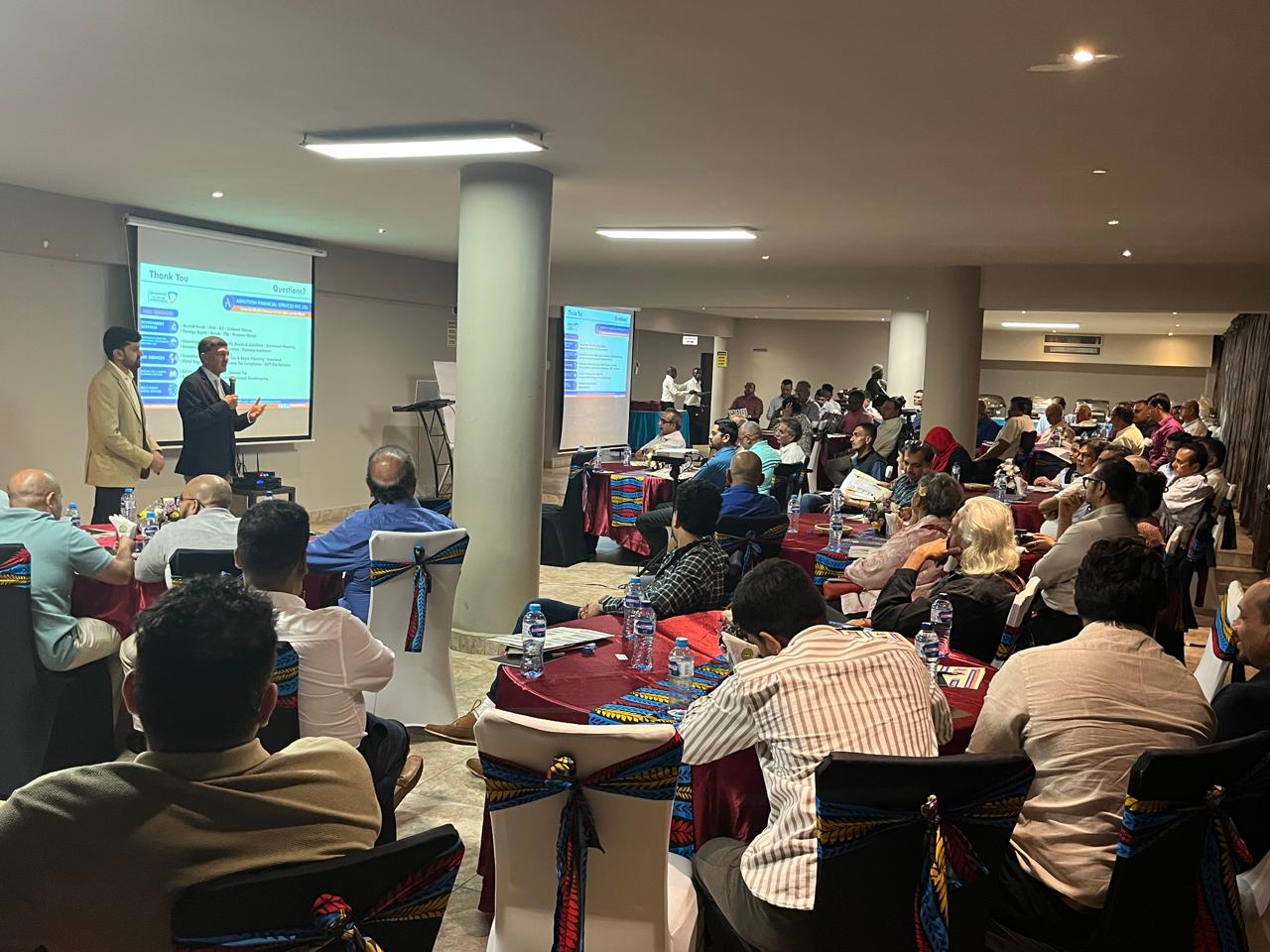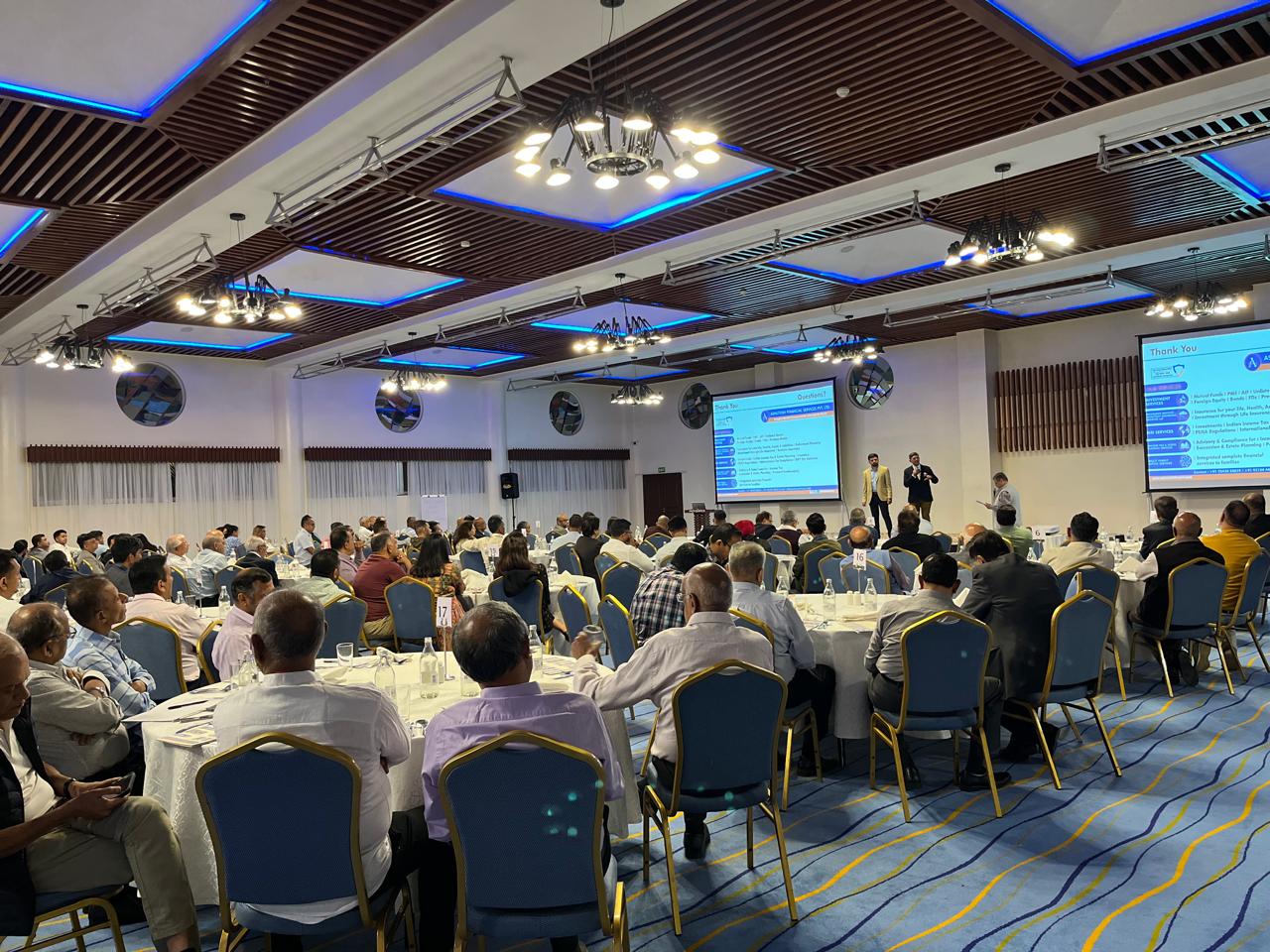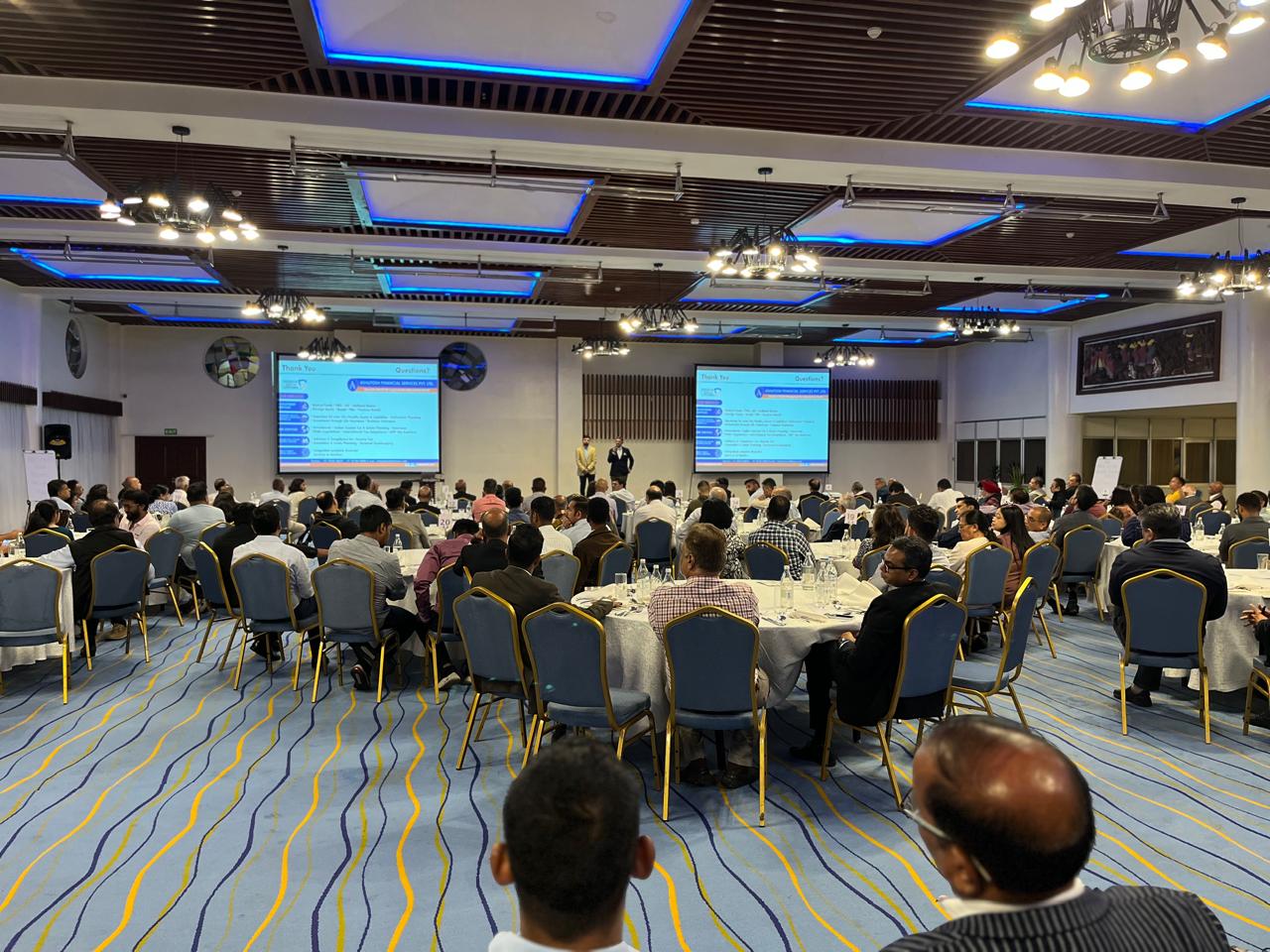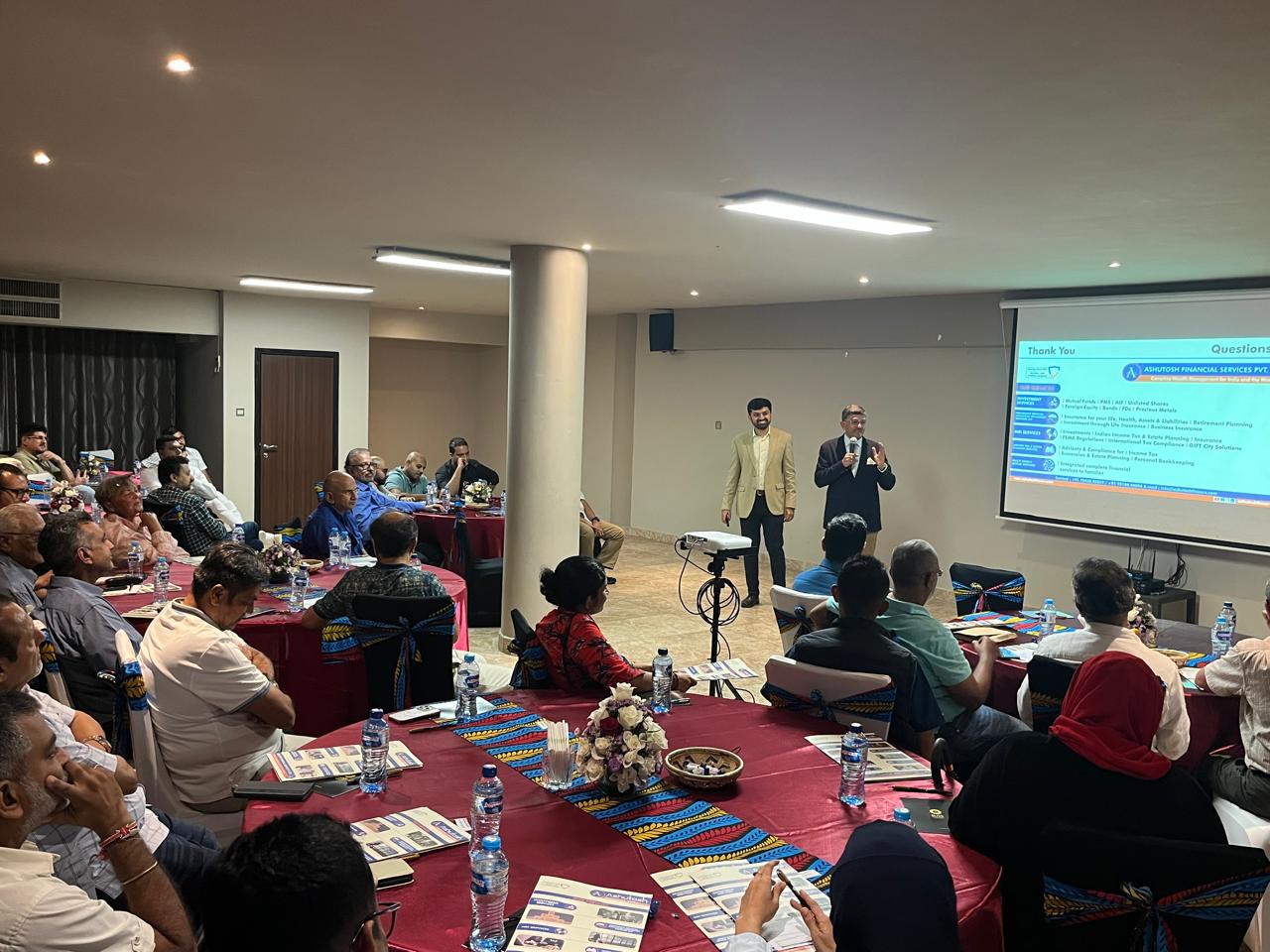
For Kenya’s Indian diaspora, questions about home rarely stay simple once money enters the picture. A bank account back in India, a plot inherited from a parent, a pension that might one day need to move across borders — these are the everyday puzzles that prompted Ashutosh Financial Services to bring its financial awareness programme to Nairobi this May. The organisation has long held that sound financial decisions start with genuine understanding, not just good intentions, and its recurring sessions across the diaspora reflect that belief in practice.
On 8th May, 2025, the session “Changing Landscape of Taxation, Regulations and Investments in India” was held in Nairobi for the Kenyan NRI community, led by Daxesh Kothari and CA CFP Rajit Kothari. Given how many Indians in Kenya maintain financial ties to India through property, savings, or family, the topics chosen spoke directly to the compliance questions this audience faces year after year.
The session opened with the mechanics that trip up most NRIs first: banking. Once someone becomes a non-resident, Indian law under FEMA no longer permits them to hold an ordinary resident savings account, so it must be converted or closed. In its place, NRIs typically use one of three account types. An NRO account holds funds earned in India and is taxable, though it does allow joint holding with residents. An NRE account, by contrast, holds foreign earnings remitted from abroad, is fully repatriable, and its interest is tax-exempt. FCNR accounts work similarly but hold deposits in foreign currency rather than rupees. Moving money out of India isn’t unlimited either — NRIs can generally repatriate up to a million US dollars a year from an NRO account, provided applicable taxes are settled first, though current income like rent or dividends can move without that ceiling.
Compliance paperwork came next, and here the session cleared up a common source of confusion. A PAN card is required for nearly anything financial in India — opening accounts, buying property, investing in mutual funds — while an Aadhaar card is optional for NRIs and only mandatory to link with PAN if one already holds it.
On taxation itself, the central idea presented was choice: a Kenya tax resident can be taxed either under ordinary Indian rules or under the India-Kenya Double Tax Avoidance Agreement, whichever works out more favourably. That distinction matters most on withholding tax rates. Interest income, for instance, attracts 30% tax for NRIs generally, but only 10% under the treaty; equity mutual fund gains taxed for NRIs can drop to nil for Kenya residents once the treaty applies. To actually access these lower rates, though, requires a bit of legwork — obtaining a Certificate of Residence from Kenyan authorities and filing Form 10F with India’s tax department before submitting these to the relevant financial institution.
Succession planning received equal attention, since many NRIs mistakenly assume a bank nomination settles the matter of who inherits their Indian assets. It doesn’t. A nominee is only a custodian; actual ownership passes according to succession law, either through a will or, in its absence, under applicable intestate provisions. Reassuringly, a valid will for Indian assets can be prepared entirely outside India, so long as it’s properly signed and witnessed before a notary.
The discussion then turned to what India’s growth story means for someone building wealth abroad. With growth projections outpacing most major economies and a stock market ranking among the world’s largest by capitalisation, the case for participation was framed less around excitement and more around structured options: mutual funds and systematic investment plans for most investors, portfolio management services for larger allocations, and — for those wanting exposure without India-specific tax filings — routes through GIFT City, India’s international financial centre, where gains on certain fund structures carry no Indian tax obligation at all.
Real estate came up too, but with a note of caution rather than encouragement — liquidity, management from a distance, and the fact that younger generations often have little interest in relocating to oversee inherited property all make it a less practical option than financial assets for most NRI families.
Sessions like this one underline something Ashutosh Financial Services returns to often: that navigating another country’s financial system becomes far less daunting once the rules are actually explained, rather than left to assumption or hearsay. As India’s regulatory and economic landscape keeps shifting, that kind of grounded, ongoing education remains as relevant to the diaspora as ever.